How do we perceive art ?
Art is a dance between the painter and the viewer. The viewer leads the dance, he transforms mere strokes upon the canvas into a three dimensional world. His interpretation are private, intimately private.
Interpretations are driven by convergence of psychology and human visual perception. The artist provides the canvas and you add your interpretations, thereby adding meaning to the painting. The is the quintessential process of perceiving art.
Psyche is beholden to viewer’s personal experiences, knowledge, and emotions. You see what you already know.
“The eye sees only what the mind is prepared to comprehend” – Robertson Dave
What I perceive are not the crude and ambiguous cues that impinge from the outside world onto my eyes and my ears and my fingers. I perceive something much richer—a picture that combines all these crude signals with the wealth of past experience… Our perception of the world is a fantasy that coincides with reality.
Reference : Chris Frith in his 2007 book “Making Up the Mind: How the Brain Creates Our Mental World
The question Kandel raises in his book is :
Can any aspects of art or art in entirety be studied objectively ? Can creative interpretation be explained logically?
His answer is yes . He approaches the topic with same mental tool of reductionism that helped him discover the physiology of long term memory for which he was awarded the nobel prize.
Scientific reductionism is mental tool for understanding complex processes by explaining its atomic components to understand the whole process. ( this tool fails to explains complex systems – like consciousness phenomenon).
Kandle marries this process to explain Abstract Expressionist.
Reductive physiology of visual processing : How humans ‘see’

Seeing begins with Input from retina (eye) going to the brain cortex via lateral geniculate to visual cortex. The pathway branches off to and also recieves signals from different parts of the brain.
1. ‘Where’ pathway is one the branch that is concerned with where an object is located in external world ( somewhere in parietal lobe).
2. ‘What’ pathway which is concerned with what the object is. The identity of the object is learned from experience. Hippocampus plays a major role in formation of memory.
3. Right before lateral geniculate this information is also channeled to amgydala where emotive response to the image is generated. It is the reason why you ‘feel‘ after seeing something. This is the inverse optic phenomenon.
Inverse optic phenomenon
Retina recieves a 2D image but perception of reality is three dimensional. The brain constructs reality with ‘guesses’. It uses signals from retina, memory and emotions to create a simulcrum of reality. Object has color
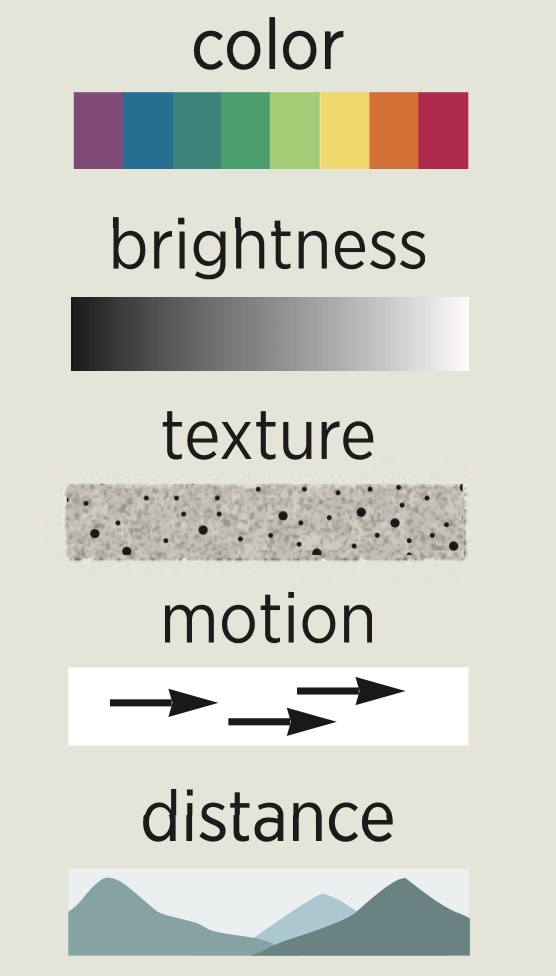
Art of seeing is has two components
Tops down is framework based on our experiences/knowledge while bottoms up approach is inherent to computational circuitry of the brain. This idea is similar to First order / second order thinking articulated in the “Thinking, fast and slow by Daniel Kahneman”
Bottoms up approach
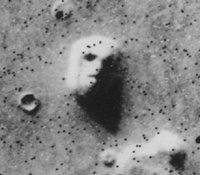
Prime example of bottoms up approach of the human visual perception is a phenomenon known as pareidolia. Like seeing faces everywhere. Brain has a specific region dedicated for detecting faces which was evolved to detect threats. This region is why we see faces in abstract simple and complex patterns.
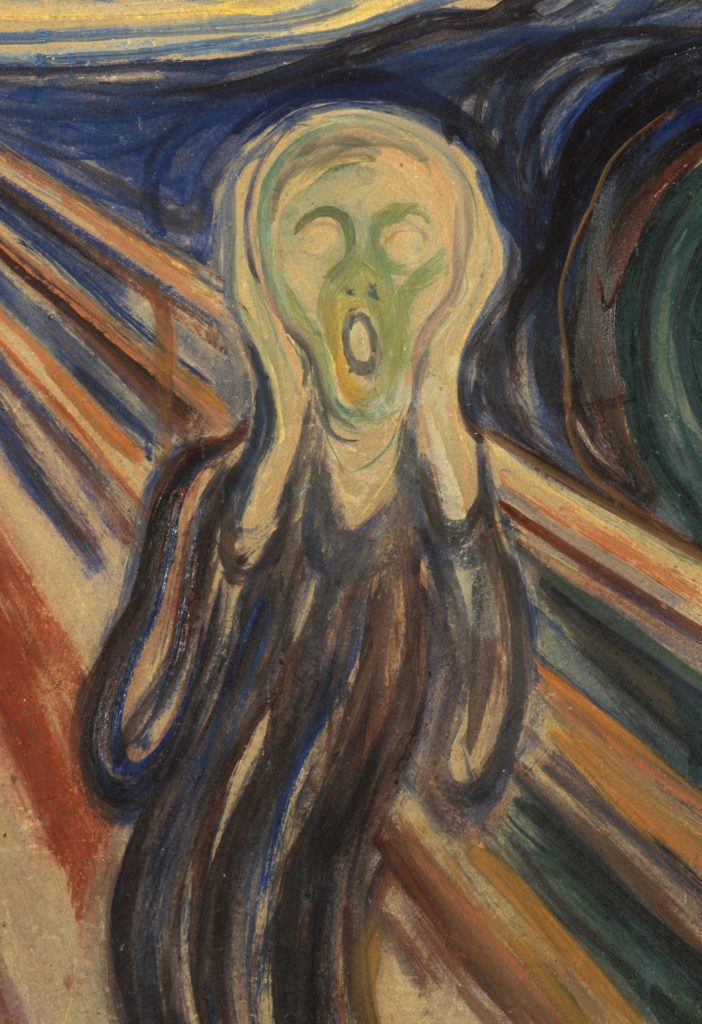
Classical western art focused on mimesis. Mimesis is the process of imitating the reality, art trying to reproduce reality. Classical art expression of the reality. The scenes were created to capture reality.
It is silent yet you can actually feel what the artist is trying to convey. The sense of terror is evident from looking at the first instance. There’s a face screaming fear.

Top down process :

Here, you cannot just ‘know‘ what the painting is about. Inference is not immediate. It could be just about anything. The viewer has to interpret these lines and primary colours.
My interpretation is that since there are multiple squares inside a big square in primary colors. it could be about fibonacci sequence. Your interpretation would vary. You might see symmetry, flatness or harmony.
These are Piet Mondrian’s own words, so feel free to interpret them as you wish.
I construct lines and color combinations on a flat surface, in order to express general beauty with the utmost awareness. Nature (or, that which I see) inspires me, puts me, as with any painter, in an emotional state so that an urge comes about to make something, but I want to come as close as possible to the truth and abstract everything from that, until I reach the foundation (still just an external Foundation!) of things.
(Mondrian 1914)
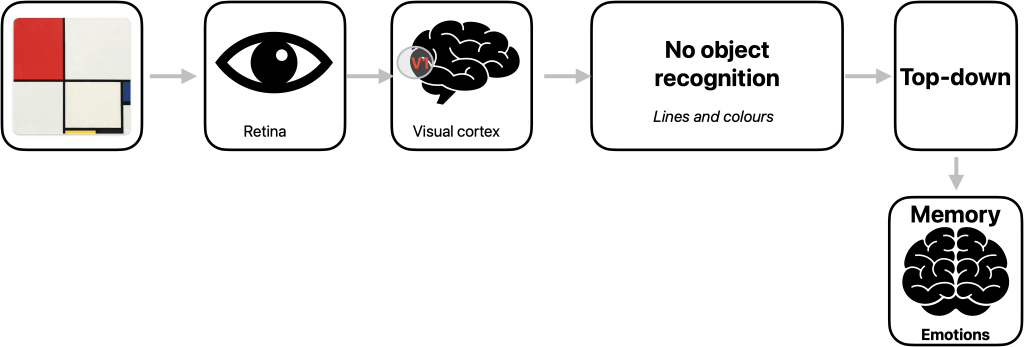
Inference here involves imagination and creativity. The front cortex / inferior temporal cortex are recruited for this task. Stores of long term memories are dredged up and associated to create an internal representation of the image. This perception is not innate but cogitated.
This what the author has called “Beholder’s share” . Art as a mirror for the self ( what is self is reduced to default mode network for sake of this argument)
Kandel argues that artists are using reductionism intuitively to elicit perception of a deeper reality.
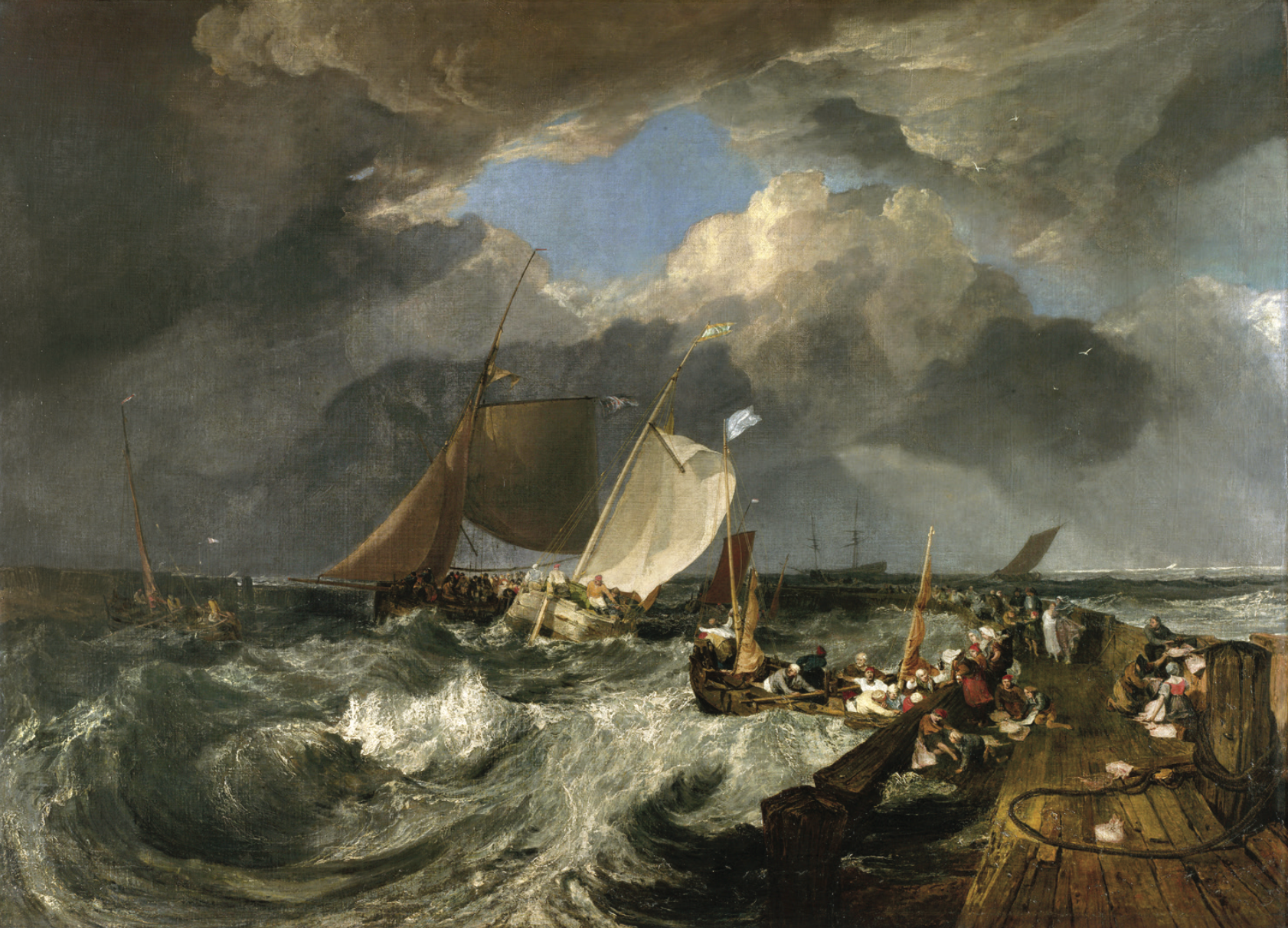
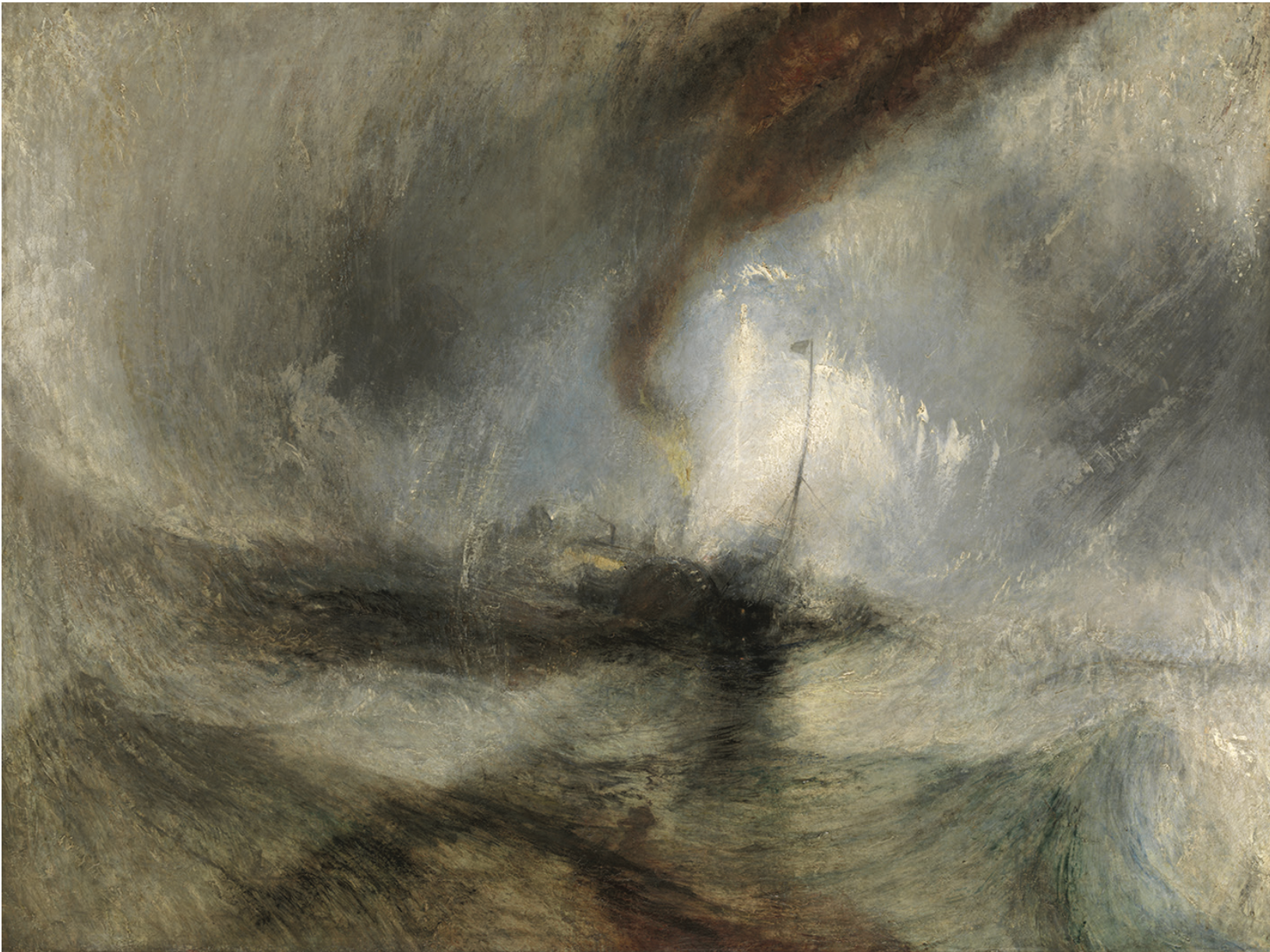
These are two paintings by J.M.W. Turner. The first is a realistic representation. It is eliciting drama through mimesis depicting raging sea. The second painting reduces all the elements from the first painting into its core elements of light , color and twisted strokes. It elicits something primal.
Every artist had his own version of reductionism.
Mondrian used sharp lines.
Mark Rothko used soft, hovering blocks of color devoid of sharpness. He reduced the form to color triggering something known as looming effect. It the effect that visual cues that make a form appear to be moving towards the viewer. Blurred lines are percieved as movement, the red red and black elicit strong emotions (danger/passion) as some colours are directly stimulate the amygdala,bypassing higher cognitive filter.
The question here is to know if the art below uses “Bottoms up” approach or “Top-down” approach.
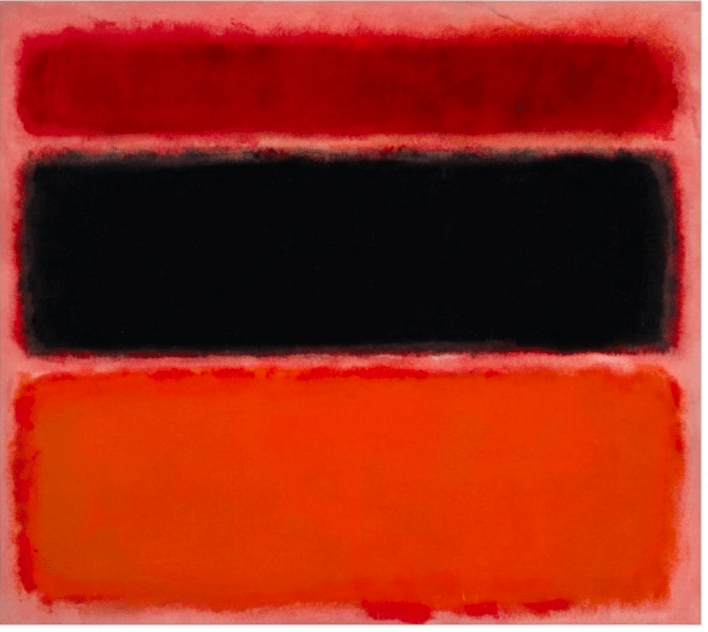
Abstract art creates a “new way of seeing”. The viewer is provoked to use his creativity and mix it up with baser emotive reactions.
Counter argument Kandels argument
Mimetic art also provokes awe and imagination. Photography made the mimetic paintings obselete so the artists created new meanings. Pollock used “action painting” where the painting was more about the artists than the art.
“The good painter has to paint two principal things, man and the intention of his mind. The first is easy and the second is difficult. – Leonardo da vinci
 MEDLEY OF DISCORDANT THOUGHTS