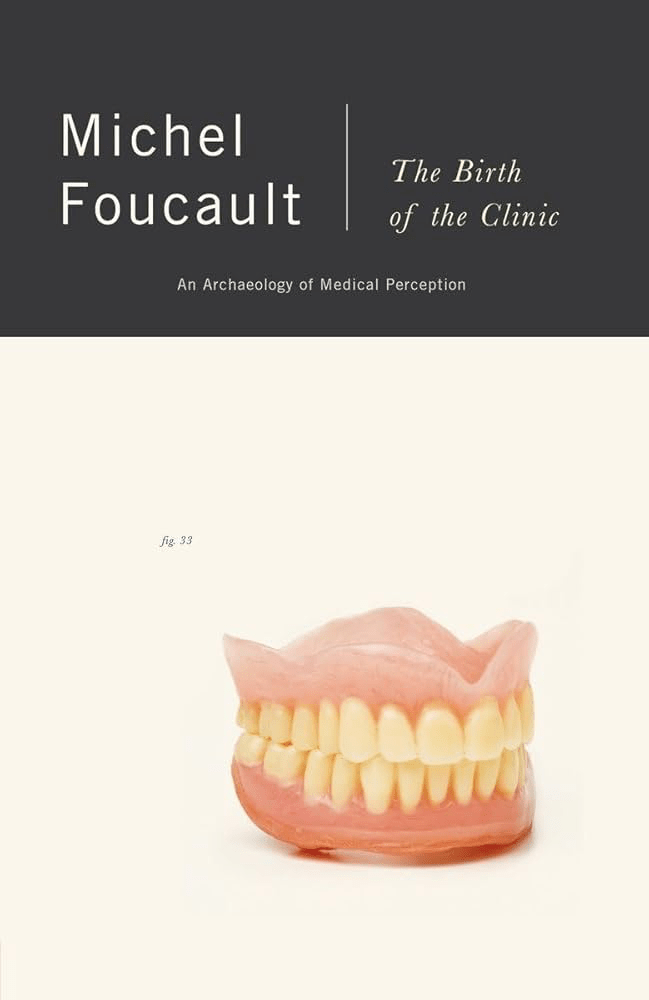
** This post and the title of which has borrowed extensively from the book The Birth of the Clinic: An Archaeology of Medical Perception by Foucault. **
All medicine is interaction between patient and doctor within a context. The context being a web of complex expectations driven by experience. There is embedded asymmetry that makes this interaction not a commodity or a ‘service’. This interaction involves a dance around authority, social position and personal narratives. It is context dependent epistemic encounter.
Patient’s personal narrative, his sufferings are collapsed into a paragraph of general history. On an average a physician will interrupt a patient describing her symptoms within 18 seconds. Symptoms don’t arrive as raw data, they are already interpreted. Patients lived experience lacks the authority or legitimacy.
The art of medicine is about acknowledging this lived experience, the aim is to reduce suffering and not ‘treat’. Treatment is the afterthought of medicine.
We doctors are educated in dogmatic certainty.This certainty is fragile. it’s fallible to n=1, the patient.
What all that we know is based only on a modest level of understanding. Things that were thought to be pseudo-science are now proven dictums : like brain-gut connection, brain-immune system connection (Recent study published DOI: 10.1126/science.adi1025) or effects of stress on immunity. The dogma is death of science.
Counter points
The author is factually incorrect about medicine, patient-doctor interactions. He has superimposed sociological aesthetics on medicine which assumes doctors to be ignorant of biases and mental models for decision making.
His main thesis of “Medical gaze” is incorrect. Narrative meaning has no value because human narration is never objective. it is marred by biases and prior experiences.
Body is the field of interpretation because a doctor in his individual consultation is concerned with the immediate, which is to identify and treat the pathology. The broader sociological problems that made the man a patient are beyond his control. The diagnostic matrix is objective because it functions to treat the body and not the society.
 MEDLEY OF DISCORDANT THOUGHTS